
As an Amazon Associate, GadgetDealFlow earns from qualifying purchases.
Introduction:
(Bluetooth Speakers vs Smart Home Speakers)
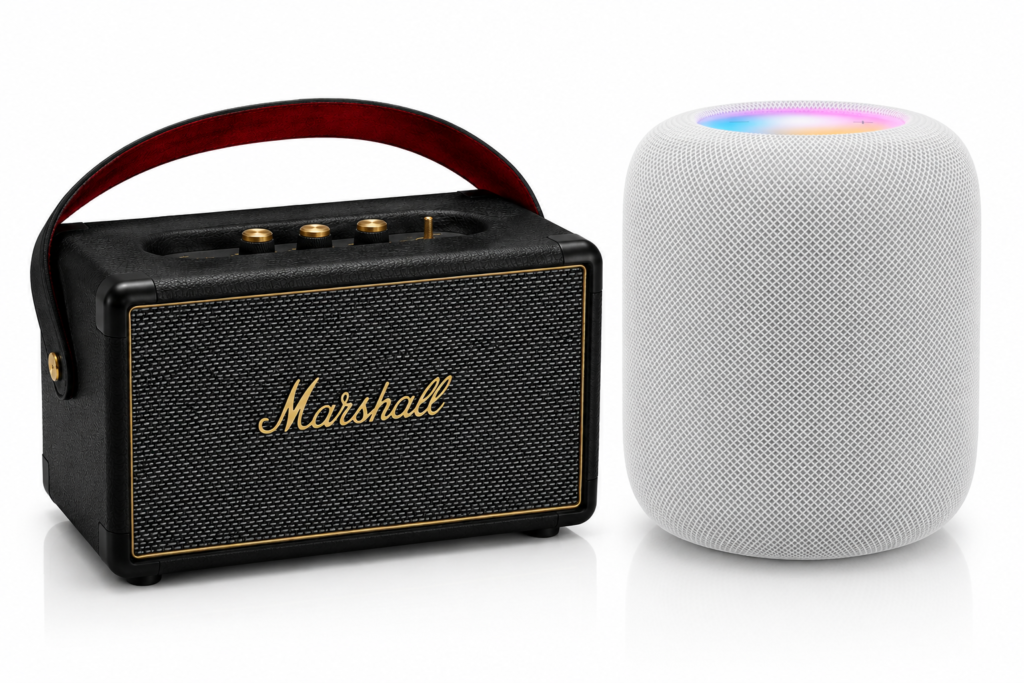
Choosing between Bluetooth speakers and Smart Home speakers comes down to how, where, and why you plan to use it. Bluetooth speakers are generally designed around portable music playback, making them ideal for taking your music to the backyard, beach, park, travel, or simply from room to room. Many offer rechargeable batteries and water-resistant designs, while basic Bluetooth playback doesn’t require Wi-Fi or an internet connection.
Smart home speakers, on the other hand, are built to do more than play music. They typically connect to Wi-Fi and add features such as voice assistants, hands-free commands, smart-home control, streaming services, timers, information, and multi-room audio. This makes them especially appealing if you want your speaker to become part of your connected home rather than simply serve as a wireless music player.
Ultimately, the best choice is the speaker that matches your lifestyle. Before buying, consider where you’ll use it, whether you need battery power, how much volume and bass you want, your preferred music ecosystem, smart-home compatibility, privacy preferences, durability, and budget. If you’re torn between the two, a hybrid model that combines Bluetooth with Wi-Fi and smart features can offer a useful middle ground.
This guide compares Bluetooth speakers vs smart home speakers to help you choose the best option for your lifestyle, budget, and listening experience before making your next purchase.
| Feature | Bluetooth Speakers | Smart Home Speakers |
|---|---|---|
| Main Purpose | Portable music playback anywhere | Voice-controlled home entertainment and smart home control |
| Connectivity | Mainly Bluetooth (phone → speaker) | Wi-Fi + Bluetooth (internet-connected ecosystem) |
| Portability | Usually battery-powered and designed to move | Usually designed for a fixed location at home |
| Voice Assistant | Usually none (some have limited support) | Built-in Alexa, Google Assistant, or Siri support |
| Internet Required | No — works offline with a Bluetooth device | Yes — most features require Wi-Fi |
| Multi-Room Audio | Limited or unavailable | Strong support across multiple rooms |
| Smart Home Control | Cannot normally control devices | Can control lights, thermostats, cameras, locks, etc. |
| Sound Quality Focus | Loudness, durability, outdoor use | Balanced sound, room filling audio, ecosystem integration |
| Battery Life | Hours to days depending on model | Usually plugged into power |
| Best Location | Outdoors, travel, parties, garage, pool | Bedroom, kitchen, living room, office |
Bluetooth Speakers
What They Are?
Bluetooth speakers are wireless audio devices that connects to smartphones, tablets, computers, and other compatible devices using Bluetooth technology, allowing you to stream music, podcasts, videos, and other audio without cables. Unlike traditional wired speakers, most Bluetooth speakers are designed for simple plug-and-play use, making them convenient for everyday listening. Many models feature built-in rechargeable batteries, compact designs, and wireless ranges that allow you to enjoy your audio without staying right next to the speaker.
One of the biggest advantages of Bluetooth speakers is their portability and versatility. Depending on the model, you can take one to the backyard, beach, park, office, or on vacation. Many also offer water and dust resistance, surprisingly powerful sound, enhanced bass, stereo pairing, hands-free calling, and long battery life. For shoppers who want straightforward wireless music without relying on Wi-Fi, a Bluetooth speaker can be an excellent combination of convenience, portability, durability, and sound quality.
Advantages (Pros)
Highly portable
- Built-in batteries allow listening anywhere
- Great for travel, camping, beaches, and outdoor activities
Easy setup
- Pair your phone and start playing music
- No Wi-Fi or account setup required
Durable designs
Many models include:
- Waterproof ratings (IP67/IP68)
- Shock resistance
- Rugged construction
Better for outdoor volume
Popular models prioritize:
- Strong bass
- High maximum volume
- Long battery life
Disadvantages (Cons)
- Usually cannot answer questions or perform smart tasks
- Limited integration with smart home devices
- Usually supports only one audio source at a time
- Bluetooth range is limited compared with Wi-Fi systems
Best For:
- Outdoor parties
- Travel
- Poolside listening
- Garage/workshop music
- Affordable wireless audio
Examples:
- JBL portable speakers
- Bose SoundLink speakers
- Ultimate Ears speakers
Want to find the right Bluetooth speaker for you? Check out our Ultimate Guide to Bluetooth Speakers of 2026: Ranking the Best for expert comparisons, top picks, and buying tips to help you choose with confidence.
Smart Home Speakers
What They Are?
Smart home speakers are Wi-Fi-connected speakers designed to do much more than play music. It typically includes a built-in voice assistant, such as Alexa, Google Assistant, or Siri, allowing you to control music, ask questions, set timers and reminders, check information, and perform other tasks using voice commands. Unlike a traditional Bluetooth speaker, a smart speaker can often connect directly to streaming services and other compatible smart-home devices over your home network.
The biggest advantage of a smart home speaker is hands-free convenience and smart-home integration. Depending on the model and ecosystem, you can use it to control compatible smart lights, thermostats, plugs, cameras, TVs, and other connected devices, as well as create routines and multi-room audio systems. For users building a connected home, a smart speaker can serve as a convenient central hub for entertainment, voice control, and everyday home automation.
Popular ecosystems include:
- Amazon Alexa
- Google Assistant
- Apple Siri
- Sonos smart audio ecosystem
Advantages (Pros)
Hands-free voice control
Examples:
- “Play jazz music”
- “Set a timer”
- “What is the weather?”
- “Call my family”
Smart home automation
Can control:
- Smart lights
- Security cameras
- Thermostats
- Door locks
- Smart plugs
Multi-room audio
Multiple speakers can work together throughout a home.
Better ecosystem experience
Works with:
- Streaming services
- Smart displays
- Home automation routines
Disadvantages (Cons)
- Usually requires Wi-Fi
- Less portable
- Privacy concerns because microphones are always listening for commands
- Some advanced features require subscriptions or compatible devices
Best For:
- Smart homes
- Kitchens
- Bedrooms
- Living rooms
- Home automation users
Examples:
- Amazon Echo Dot (5th Gen)
- Apple HomePod (2nd Gen)
- Sonos Era 300
Check out our Ultimate Guide to the Best Smart Home Audio & Visual Devices for 2026 to discover the top smart speakers, displays, and home entertainment devices worth considering this year.
Which One Should You Buy?
Although Bluetooth speakers and smart home speakers may look similar, they are designed for different needs and offer distinct features. So, which is better? Choose a Bluetooth speaker if portability, battery life, outdoor use, and straightforward music playback are your priorities. Choose a smart home speaker if you value voice control, home automation, Wi-Fi streaming, and hands-free convenience. Sound quality should also be considered carefully: speaker size, design, and intended use can have a major impact on bass, volume, and overall performance, so don’t assume that one category automatically sounds better than the other.
| Buyer Type | Better Choice |
|---|---|
| Someone who travels frequently | Bluetooth Speaker |
| Outdoor entertainment | Bluetooth Speaker |
| Pool/beach use | Bluetooth Speaker |
| Want music anywhere without Wi-Fi | Bluetooth Speaker |
| Want voice commands | Smart Home Speaker |
| Want smart lights/security control | Smart Home Speaker |
| Want whole-home audio | Smart Home Speaker |
| Want a permanent home audio setup | Smart Home Speaker |
Overall Verdict
| Category | Winner |
|---|---|
| Best Overall for Portability | Bluetooth Speakers |
| Best Sound Quality | Smart Home Speakers |
| Best for Outdoor Use | Bluetooth Speakers |
| Best Battery Life | Bluetooth Speakers |
| Best Smart Home Control | Smart Home Speakers |
| Best Voice Assistant | Smart Home Speakers |
| Best Connectivity | Smart Home Speakers |
| Best for Travel | Bluetooth Speakers |
| Best for Multi-Room Audio | Smart Home Speakers |
| Best Water & Dust Resistance | Bluetooth Speakers |
| Best Hands-Free Features | Smart Home Speakers |
| Best for Home Entertainment | Smart Home Speakers |
| Best Ease of Use | Bluetooth Speakers |
| Best Versatility | Bluetooth Speakers |
| Best Value | Bluetooth Speakers |
| Best for Smart Homes | Smart Home Speakers |
| Best for Parties & Gatherings | Bluetooth Speakers |
| Best for Everyday Home Listening | Smart Home Speakers |
| Best for Budget Buyers | Bluetooth Speakers |
| Best Overall Choice | Depends on Your Needs |
Choose Bluetooth speakers if your priorities are portability, battery life, outdoor use, durability, travel, and flexible music playback. Bluetooth speakers generally don’t require an internet connection to stream audio from a compatible device, which makes them particularly convenient when you’re away from home.
Choose smart home speakers if you want voice assistants, Wi-Fi connectivity, smart-home control, multi-room audio, and hands-free convenience. They’re generally better suited to a connected home environment where the speaker stays in a central location.